Biomod/2014/Komaba/Results
<html> <head> <script src="http://ajax.googleapis.com/ajax/libs/jquery/1.11.1/jquery.min.js"></script> <script src="http://maxcdn.bootstrapcdn.com/bootstrap/3.2.0/js/bootstrap.min.js"></script> <link href="http://maxcdn.bootstrapcdn.com/bootstrap/3.2.0/css/bootstrap.min.css" rel="stylesheet"> <style>
- content{margin-left:0;}
.navbar{ top:0px; position:fixed; width:97%; }
- contentSub{margin-top:5px;}
/*clearing the side openwetware panels*/ .firstHeading, #column-one, #p-bookmarks, #p-history , .portlet{ display:none; }
- bodyContent/*clearing the side openwetware panels
.firstHeading, #column-one, #p-bookmarks, #p-history , .portlet{ display:none; }
- content#bodyContent, {
/*display:none;*/ background-color:#FFFFFF; }
- OSUfooter{
clear:both; }
- footer{display: none;}
- contentSub{display: none;}
/*Done clearing*/
</style>
</head>
</html> <html> <head> <style> h3,h4 {font-weight:bold; }
- results{ width: 800px ;
 margin-left: auto ;
 margin-right: auto ;
}
- picture1 {float:left;}
- figure1 {float:right;}
- table {float:right;}
- picture2 {float:left;}
</style> </head> <body>
Results
1.Can DNA mag-beads be fixed in the wells of the microplate?
1. Determination of the ratio of b-Z-FAM and b-Z
Picture1
<img src="http://openwetware.org/images/e/e6/Result111.PNG">
Figure1
<img src="http://openwetware.org/images/e/e9/Result112.PNG">
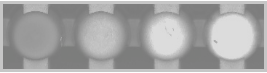
Picture 1 and Figure 1 shows the relationship between the intensity of fluorescence and the proportion of b-Z-FAM. In Picture 1, from the left one, blank, 1:9 of the ratio of b-Z-FAM and b-Z, 3:7, 10:0. In Figure 1, the cross axle is the molar fraction of b-Z-FAM DNA, and the vertical axis is L-B, that is, the intensity of the fluorescence. They shows that the specrtrophotofluorometer can endure the intensity of fluorescence if the ratio is 10:0, and fluorescence can be detected even if the ratio is 3:7.
2. Confirmation of the specific bonding between wells of a microplate and mag-beads
Picture2
<img src="http://openwetware.org/images/8/8d/Result122.PNG">
Table1
<img src="http://openwetware.org/images/b/b6/Result123.PNG">
Table2
<img src="http://openwetware.org/images/4/46/Result124.PNG">
Picture2 is the picture taken with the fluorescent microplatereader. It shows that the intensity of fluorescence of the nothing well is likely to that of the blank well, but the intensity of fluorescrnce of the cA well is not and is as strong as that of the cZ. The arrangement of cA and cZ DNA is orthonormal, that is, the hybridization between Z and cA DNA couldn’t happen. Moreover, the intensity of the fluorescence is little even when 5 layers of the mag-beads fixed on the plate. This means that the nonspecific bonding between the wells of the plate and the mag-beads can happen by fixing some DNA on the wells. So, we should figure out some good way to make the beads bond with the plate specifically by the hybridization between DNAs. For instance, linker DNA will be inserted into b-Z and b-cZ DNA.
</body> </html>