20.109(F11): Mod 3 Day 3 TEM
_homepage.jpg)
TEM
Introduction

Samples were applied last time to a wafer-thin "grid" and today they will be loaded into the TEM and placed under vacuum. The grid can be made of many kinds of materials. All have lines of a conductive metal, in our case copper, that disperse the electron beam and thereby help keep the sample from being blown to bits by the energy in the beam. A carbon mesh is strung between the metal lines. Once a sample has been applied to the grid, it's only the portions that come to rest on the carbon mesh can be visualized, along with any imperfections in the carbon mesh itself.
Protocols
We're fortunate to have Dr. Dong Soo Yun from Angie Belcher's lab who will run the TEM grids you prepared on the [2010FEG TEM] which is located in the basement of Bldg 24. Since the room that houses the instrument is small, we'll head over in our "supergroups," starting at about 1:30. The grids will take less than an hour to visualize and when you're not at the TEM, you should be working with your lab partner on your research proposal.
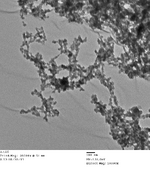
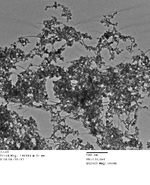
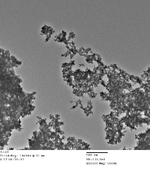
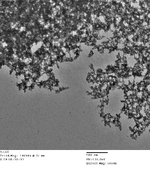
Here are some examples of the kinds of images you'll get at TEM today:
DONE!
For next time
You should now be considering the presentation materials themselves and if you can, start working on the materials you will use to describe your idea. Reconsult the specific directions for what you'll need as well as the more general guidelines for all oral presentations.

